
Where and when to cheer
The start is crowded and runners are still fresh, so your cheer counts for less there. The second half matters more. If you can only make one spot, choose somewhere between miles 18 and 22, roughly km 30 to 35.
Two spots are realistic for most people if the course loops or doubles back. Use the race’s official app and a live link to time your move, and allow extra time: crossing a marathon course on foot can take a while.
The final mile is worth it if you can get close. Runners are running on empty there, and spotting a familiar face before the finish line is a moment they’ll keep.
What to yell (and what to skip)
Use their name. A runner hears “Go, runner!” a thousand times, but their own name cuts through. Then add something specific: their pace, their training, a private joke.
Skip “You’re almost there” unless the finish is actually in sight. At mile 16, it sounds like a lie. Skip distances too, unless you’re sure, because a wrong number hurts.
- “Go, Sarah! You trained for this!”
- “Strong and steady, you look great.”
- “Just get to the next mile.”
- “We’re so proud of you!”
Marathon sign ideas that work
A good sign is readable from 30 feet away in two seconds. Use thick, dark marker on white or bright poster board, big letters, and no more than six or seven words.
Put the runner’s name on it, in the biggest letters. Funny signs get smiles from everyone, but a sign with their name is the one your runner will remember.
- “Run, [Name], run!”
- “Smile, you paid for this”
- “Tap here for power” (with a big circle)
- “Your legs will forgive you. Eventually.”
- “26.2? I thought you said 2.62”
The hard part: miles 18 to 22
Somewhere around mile 20 (around km 32), a lot of runners hit the wall: legs heavy, pace dropping, head full of doubts. This is where a familiar voice makes the biggest difference.
Keep it simple here. Runners at this stage don’t process long sentences. Their name, a “you’ve got this” and a clap is plenty. If they walk, don’t make a big deal of it; cheer just as loud.
Cheer for the strangers around your runner too. Read the names on their shirts and call them out. You’ll be surprised how many of them look up and pick up the pace.
Cheering from afar
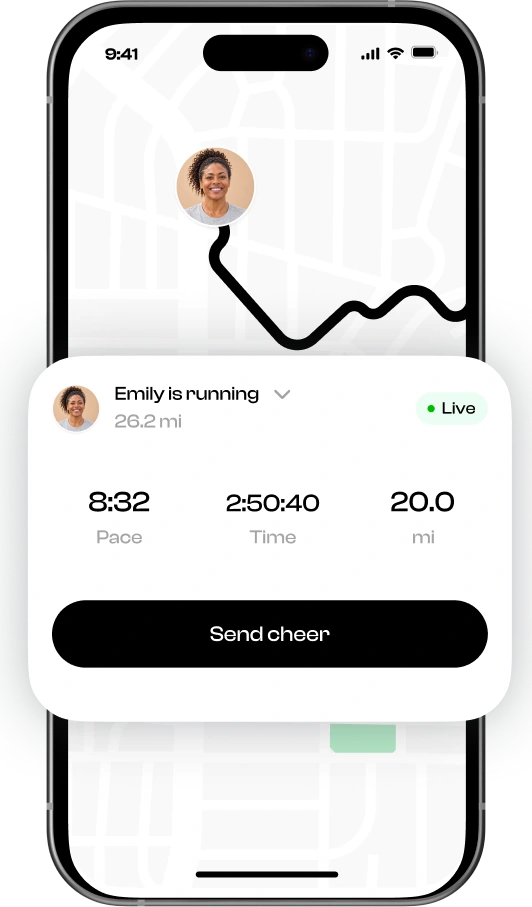
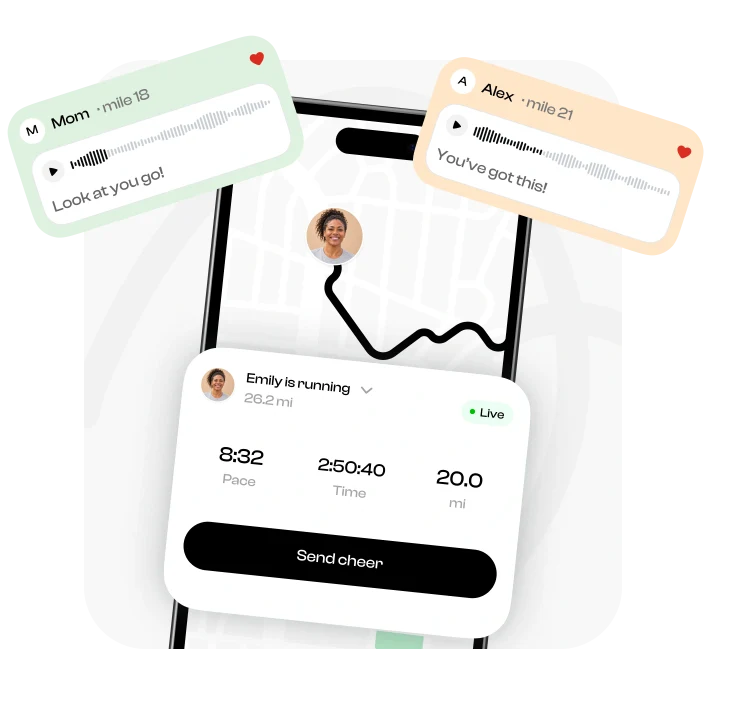
Not everyone can be on the course. Follow their live position and send messages they’ll read after the finish, or, better, a voice cheer they hear while they run.
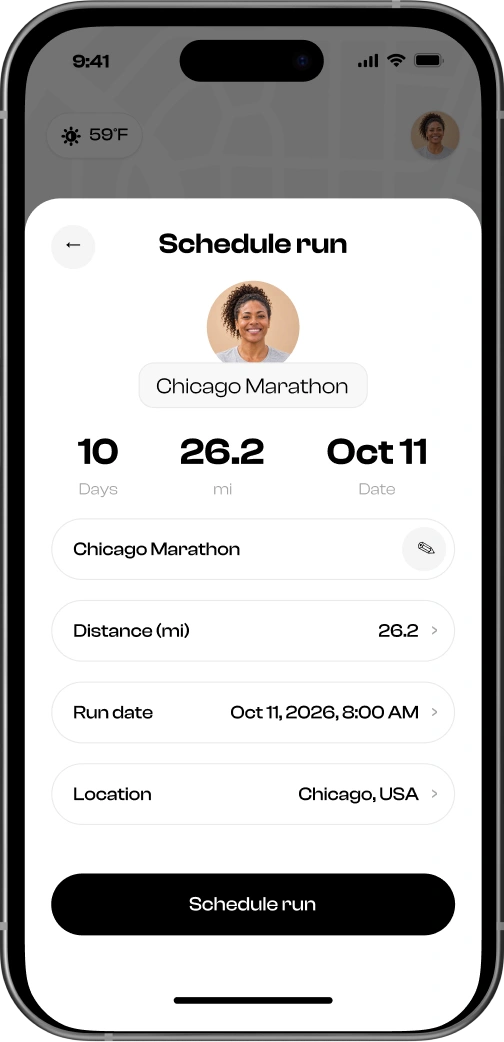
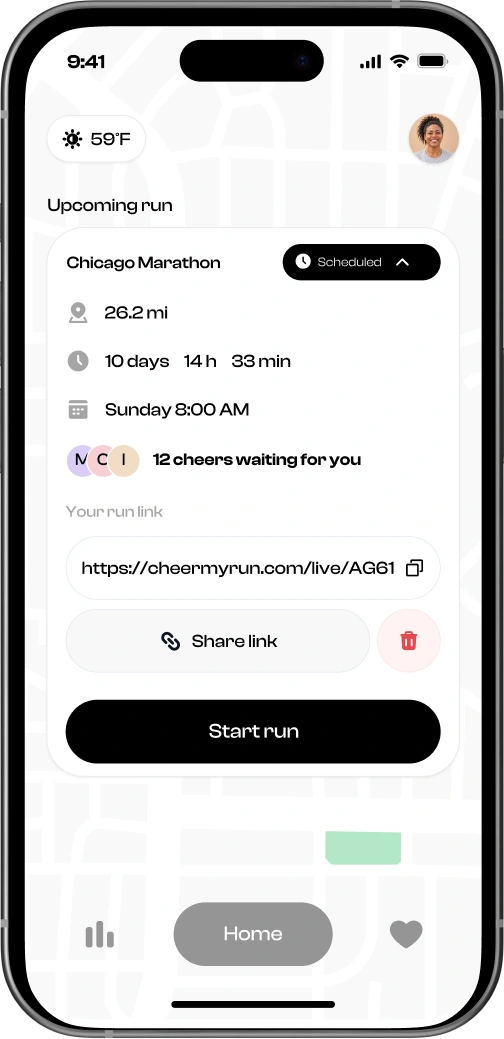
With CheerMyRun, supporters send short voice cheers that play automatically in the runner’s headphones. The runner doesn’t tap anything, and the music ducks under the cheer. Time a cheer for the late miles, when they need it most.